
Did you know that Melanoma is the deadliest form of skin cancer? Early detection is key to successful treatment. As we enter warmer months and spend more time outdoors, it’s especially important to perform regular skin checks and know the signs of potentially dangerous moles or lesions. One of the easiest and most effective tools for spotting melanoma early is the ABCDE rule, a simple acronym that can help you evaluate whether a mole should be seen by a dermatologist.
What is Melanoma?
Melanoma is a type of skin cancer that develops in the pigment-producing cells (melanocytes) of the skin. While it can appear anywhere on the body, it most commonly affects areas exposed to the sun, such as the back, legs, arms, and face. Unlike some less aggressive skin cancers, melanoma can spread quickly to other organs if left untreated, which is why early detection is so critical.
Why Early Detection Matters
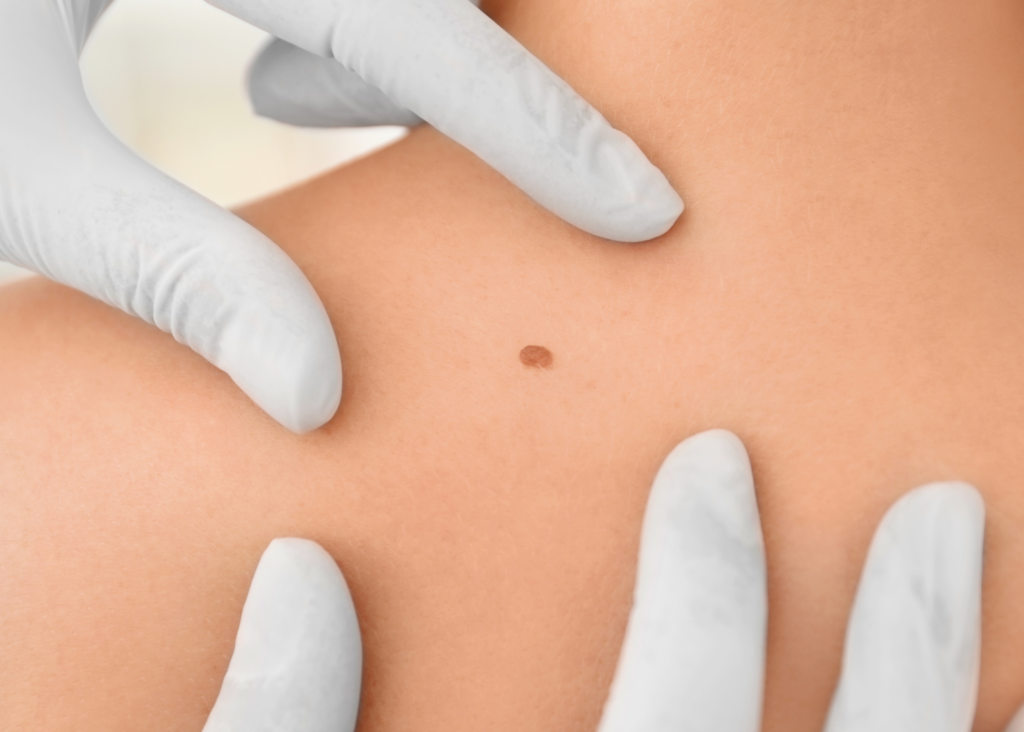
According to the American Academy of Dermatology, when caught early, melanoma has a 99% five year survival rate. However, late-stage melanoma becomes significantly harder to treat. Regular self-checks and annual skin exams with a dermatologist are essential to stay ahead of any changes in your skin.
What Do the ABCDEs Stand For?
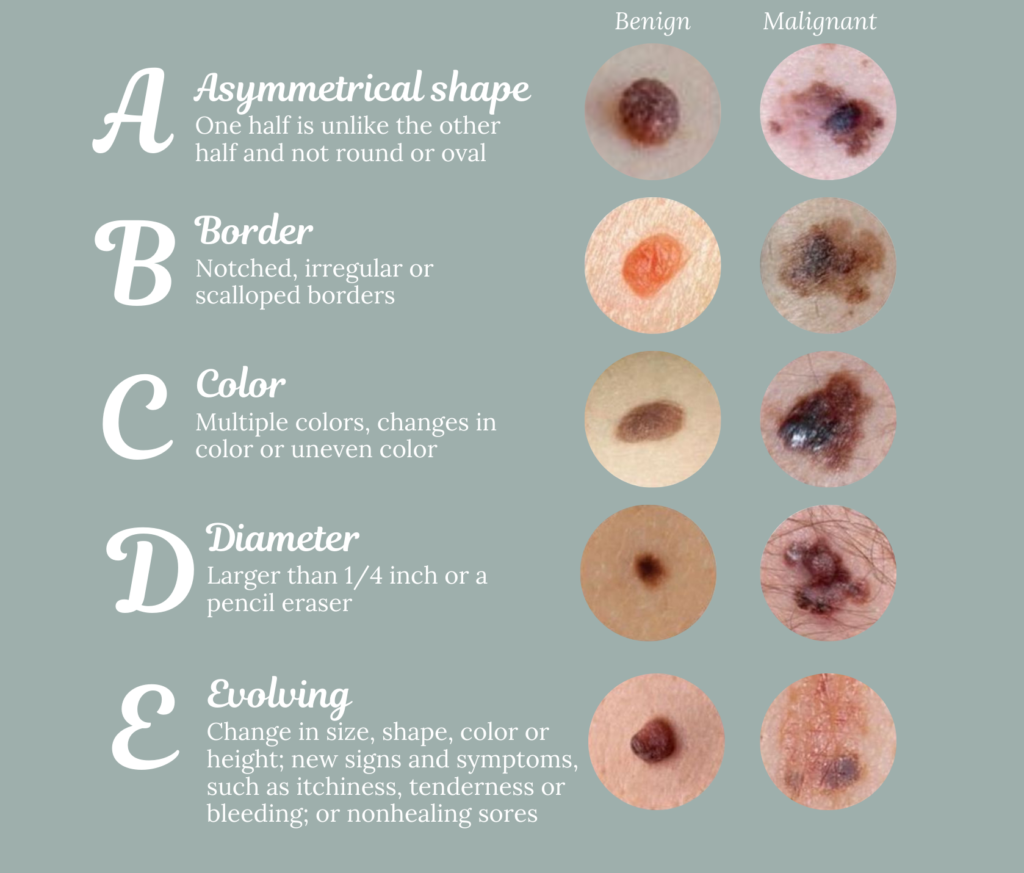
Dermatologists recommend using the ABCDE guide to evaluate moles or skin lesions that may be abnormal or suspicious.
A – Asymmetry. Benign moles are usually symmetrical, melanomas are not. With suspicious moles, one half of the mole does not match the other in shape or size. They would not be a regular round or oval shape.
B – Border. A clear, smooth border is typical of non-cancerous moles, while melanoma often has an uneven outline. Look for edges that are irregular, ragged, scalloped, notched, or blurred.
C – Color. Benign moles are usually a single shade of brown or tan. A mole with multiple colors, such as black, red, white, blue, or uneven pigmentation, may be a warning sign of melanoma.
D – Diameter. Melanomas are typically larger than 6mm (about the size of a pencil eraser), although they can start smaller. Any increase in size or a mole that grows rapidly should be examined.
E – Evolving. Any change in a mole’s shape, size, color, height, texture, or sensation (such as itching or bleeding) is a red flag. Healthy moles usually stay consistent over time.
What a Dermatologist Recommends
If you notice any of the ABCDE signs or a mole that feels “off,” it’s time to schedule a professional skin check. Here’s what our board-certified dermatologists recommend:
- Get a full-body skin exam once a year, or more frequently if you have a personal or family history of skin cancer.
- Document your moles by taking photos and tracking any changes over time.
- Protect your skin with daily sunscreen (SPF 30 or higher), especially on high-exposure areas like the face, ears, and shoulders.
- Don’t wait to ask questions. If something feels unusual or concerning, early evaluation can make all the difference.
Make Skin Health a Priority
Melanoma doesn’t discriminate. It can affect anyone, regardless of age, gender, or skin tone. Knowing what to look for and acting on it promptly can save your life. If you’re unsure about a mole or have never had a professional skin exam, now is the time.
